
Titled Land in Costa Rica: A Key Asset for Your Investor Residency Application
Navigating the nuances of personal-name ownership, investment thresholds, and documentation for your Inversionista application.
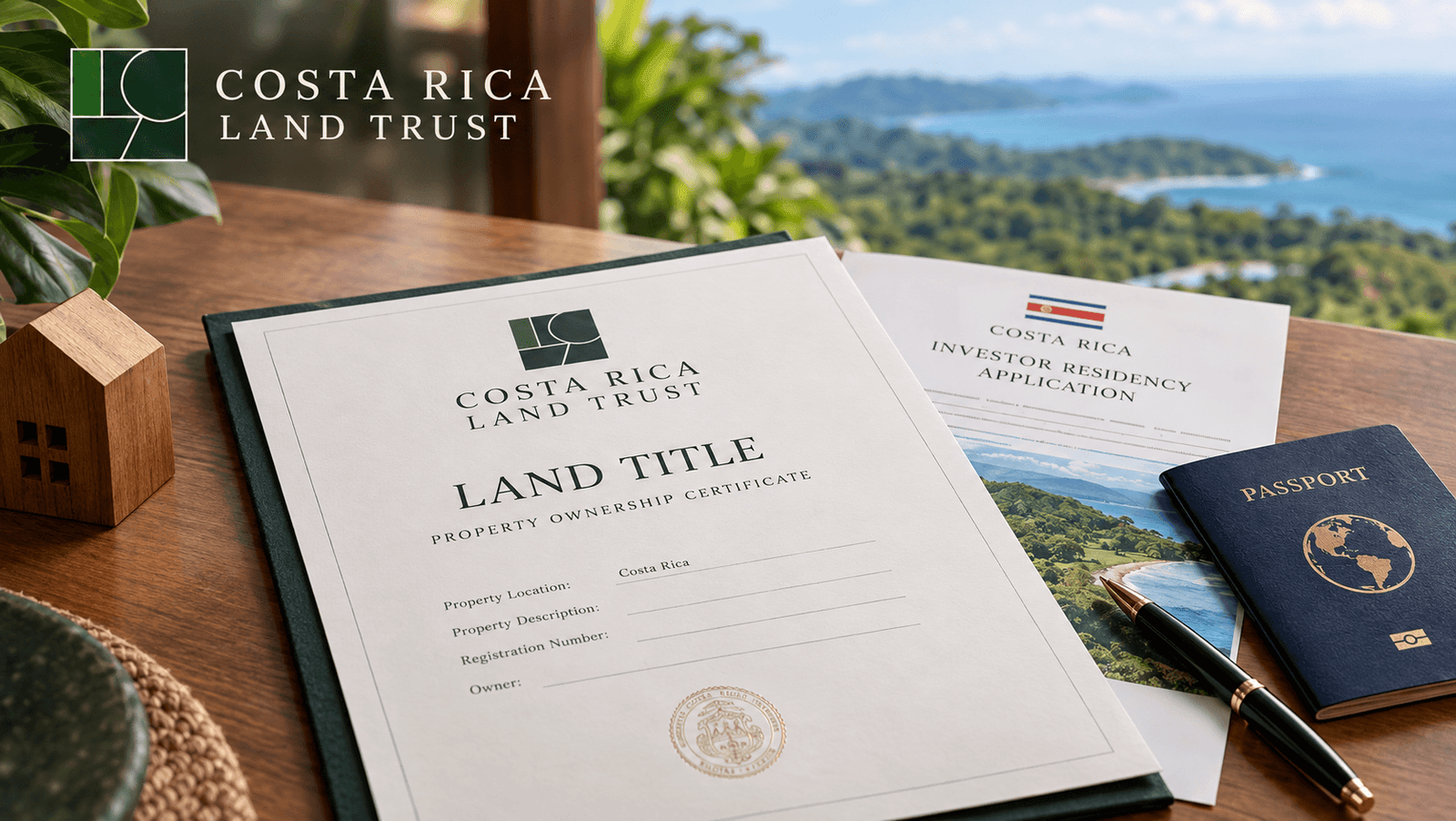
"For foreign nationals pursuing Costa Rican residency through investment, real estate remains one of the most straightforward qualifying assets — but not every property will actually get an application approved."
For foreign nationals pursuing Costa Rican residency through investment, real estate remains one of the most straightforward qualifying assets — but not every property will actually get an application approved. Immigration authorities care not just about the value of what you buy, but about exactly how you hold it. Titled land, registered directly in the applicant's own name, has become the asset of choice for a reason: it removes an entire category of documentation risk that concession land and corporate-held property simply cannot avoid.
Here's what buyers — and the attorneys advising them — should know.
How Real Estate Qualifies for Investor Residency
Under Law No. 9996, Costa Rica's Inversionista (Investor) residency category currently accepts a qualifying investment of at least USD $150,000 in real estate, business shares, securities, or approved tourism and reforestation projects. This reduced threshold — down from the previous $200,000 minimum — was introduced in 2021 to attract foreign capital, but it carries a sunset provision that was set to expire on July 14, 2026. As of this writing, it remains unclear whether the reduced threshold has been extended or has reverted toward the previous $200,000 minimum, so anyone planning an application around this figure should confirm the current status directly with an immigration attorney before proceeding.
Whatever the exact threshold turns out to be, one requirement has become consistent across recent guidance: real estate used to qualify for investor residency must generally be registered directly in the applicant's personal name at the Registro Nacional, not merely held through shares in a Costa Rican corporation. Authorities have increasingly scrutinized corporate structures, since owning shares in a company is legally distinct from owning the underlying real property.
Why Titled Land Specifically Matters
This is where the titled-versus-concession distinction becomes directly relevant to a residency case, not just a property question:
- Concession land cannot be used to qualify. Because concession property is a government use-right rather than ownership, it does not represent registered, personally-held real estate in the way immigration authorities require.
- Titled land is straightforward to document. A titled property comes with a folio real (title number) at the Registro Nacional, showing clear, permanent ownership in the applicant's name — exactly the kind of clean documentation that immigration case reviewers want to see.
- Corporate holding structures invite extra scrutiny. Even with titled land, if the property sits inside an SA or SRL rather than the applicant's personal name, additional documentation and legal structuring may be required to satisfy the "personal name" requirement.
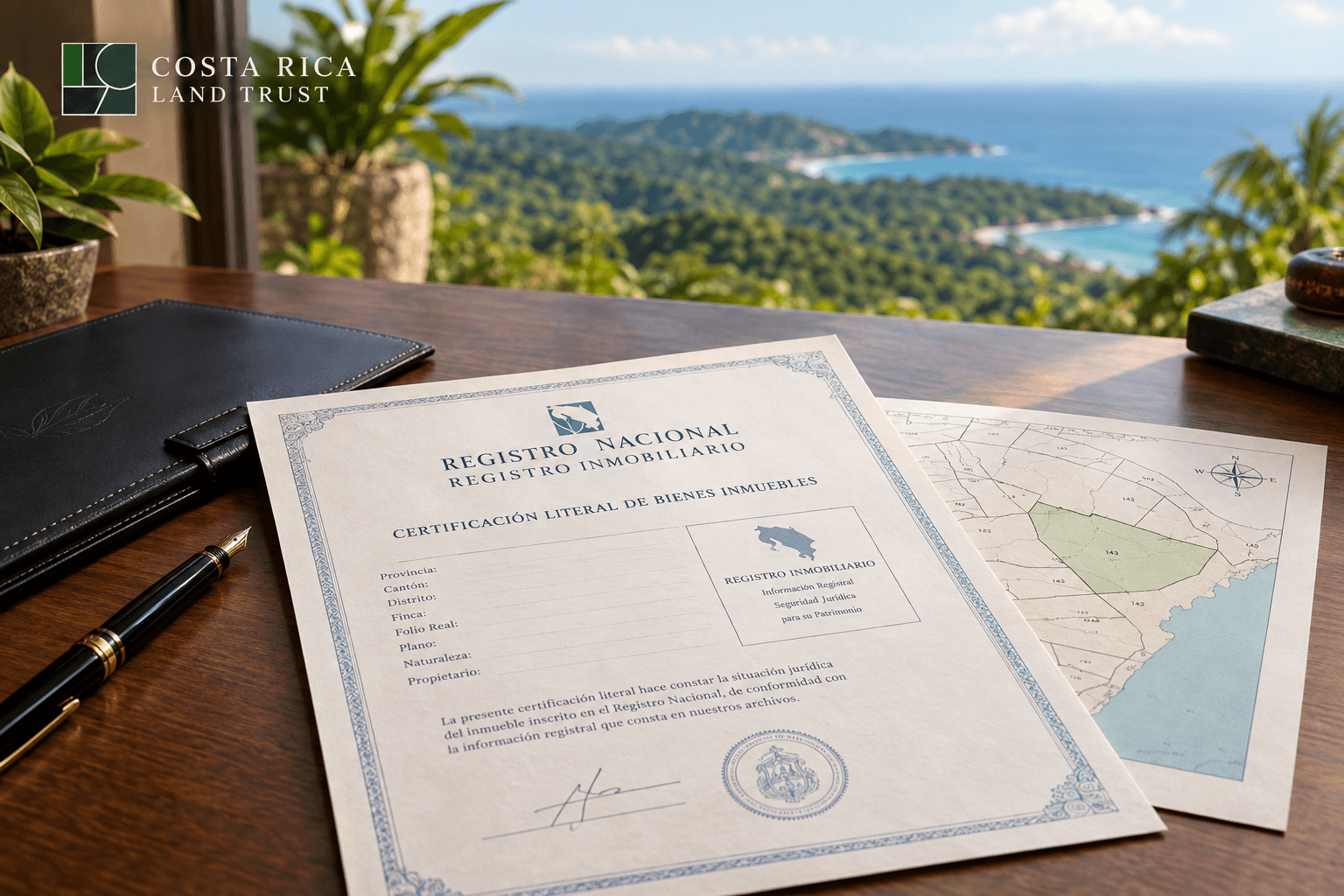
Looking for Qualifying Titled Land?
Interested in seeing our current titled land listings that qualify for direct personal-name registration? Connect with our team for a private portfolio review.
Common Mistakes That Delay or Derail Applications
Attorneys who work these cases regularly flag the same recurring issues:
- Wrong ownership structure — property purchased through a corporation without the additional steps needed to satisfy the personal-ownership requirement.
- Unclear investment documentation — no clean paper trail showing the property's registered value at or above the qualifying threshold.
- Concession property presented as a qualifying investment — a well-intentioned but disqualifying mistake, since concession land isn't registered ownership.
- Starting the legal review after arrival in Costa Rica, rather than confirming the property's eligibility before the purchase is finalized.
Every one of these issues is avoidable with the right property from the outset — which is why buyers pursuing residency should treat "is this titled, and can it be registered directly in my name" as a non-negotiable filter before making an offer.
What This Means in Practice
If residency is part of your reason for buying land in Costa Rica, the safest path is to work backward from the requirement: confirm the property is titled (not concession), confirm it can be registered directly in your personal name, and get written confirmation of its registered value at the Registro Nacional before you commit. A property that looks identical to a titled parcel on a listing page can carry a completely different legal status — and that difference is exactly what an immigration reviewer will be checking.
A Note for Immigration Attorneys
If you advise clients on Costa Rica's investor residency category, we work directly with legal teams to provide clean, verifiable titled land — with documentation packages ready for the Registro Nacional review process — so your clients' applications move forward without ownership-structure surprises. We're happy to provide a standing shortlist of qualifying, fully-titled parcels for your active cases.

Partner With Our Legal & Property Team
Reach out about a standing partnership for your immigration practice or request our private portfolio review for active investor clients.
Contact Our TeamFrequently Asked Questions
No. Concession land is a government use-right, not registered ownership, so it does not satisfy the real estate investment requirement for the Inversionista residency category.
Generally, yes. Recent guidance has clarified that qualifying real estate should be registered directly in the applicant's personal name at the Registro Nacional, rather than held solely through a Costa Rican corporation, though some corporate structures may still qualify with additional documentation.
The threshold has been USD $150,000 under Law No. 9996, but that law's reduced threshold had a sunset provision expiring July 14, 2026. Applicants should confirm the current requirement with an immigration attorney, as it may have reverted toward the previous $200,000 minimum.
The qualifying investment must generally be maintained for the duration of the temporary residency period, and its value or registration status should remain valid if you later apply to convert to permanent residency.